
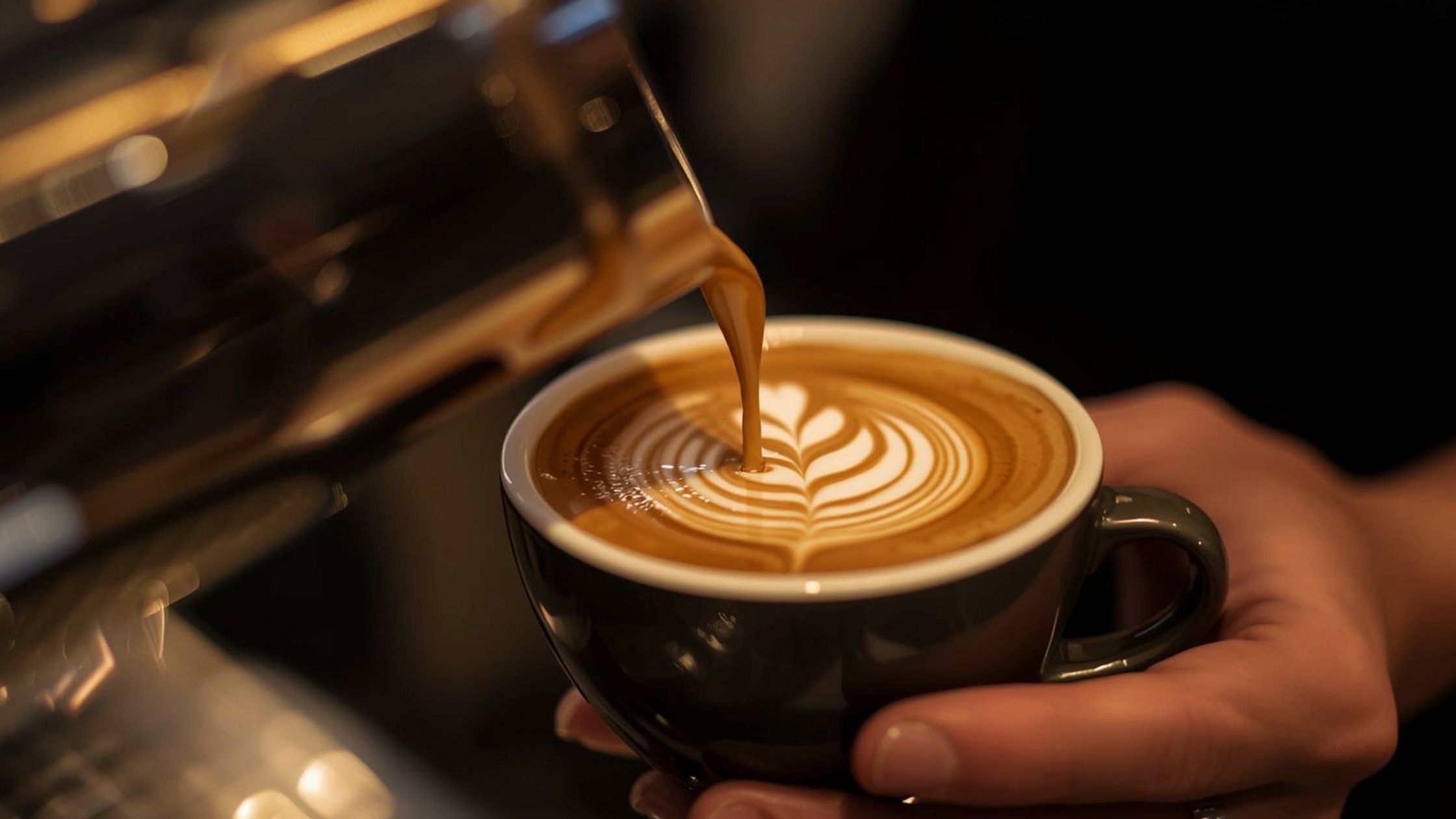
I did not plan to become a home barista. It started with a moment of excitement, and I got completely taken by the idea and decided to just go for it.
What followed was 10 days of figuring out what equipment actually matters, why a grinder is more important than the machine, where to buy things in Estonia without overpaying, and how to actually pull a decent espresso at home.
This is everything I learned, what I use, what I would do differently, and honest advice for anyone in Estonia who wants to set up a home coffee corner without spending a fortune.
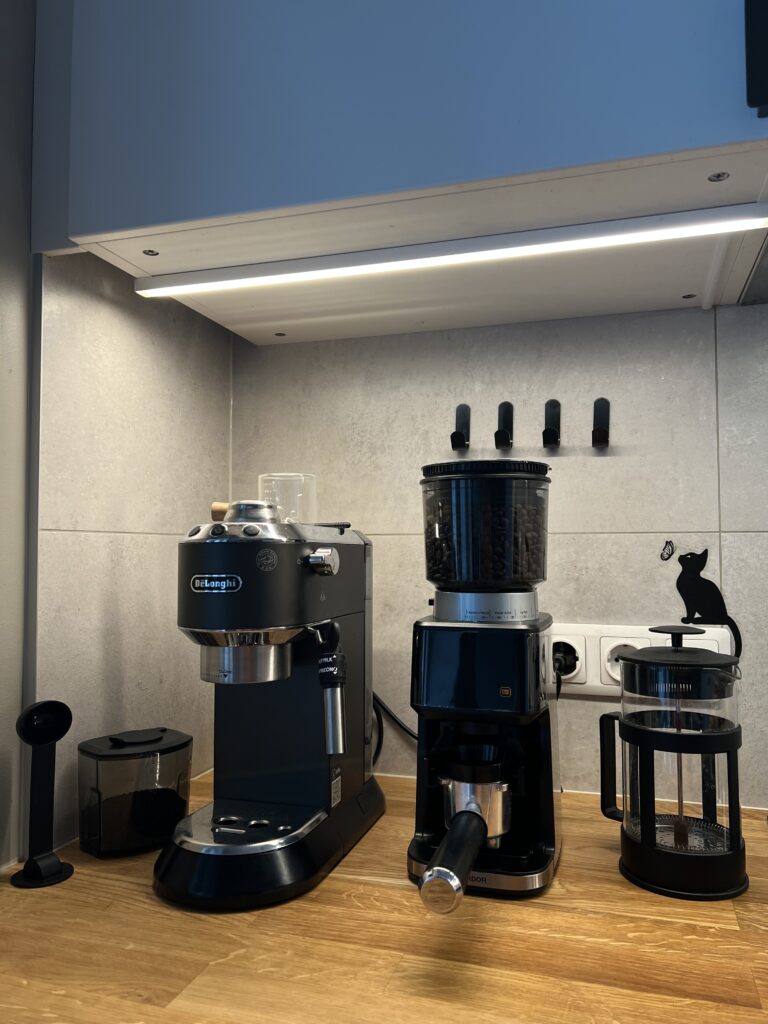
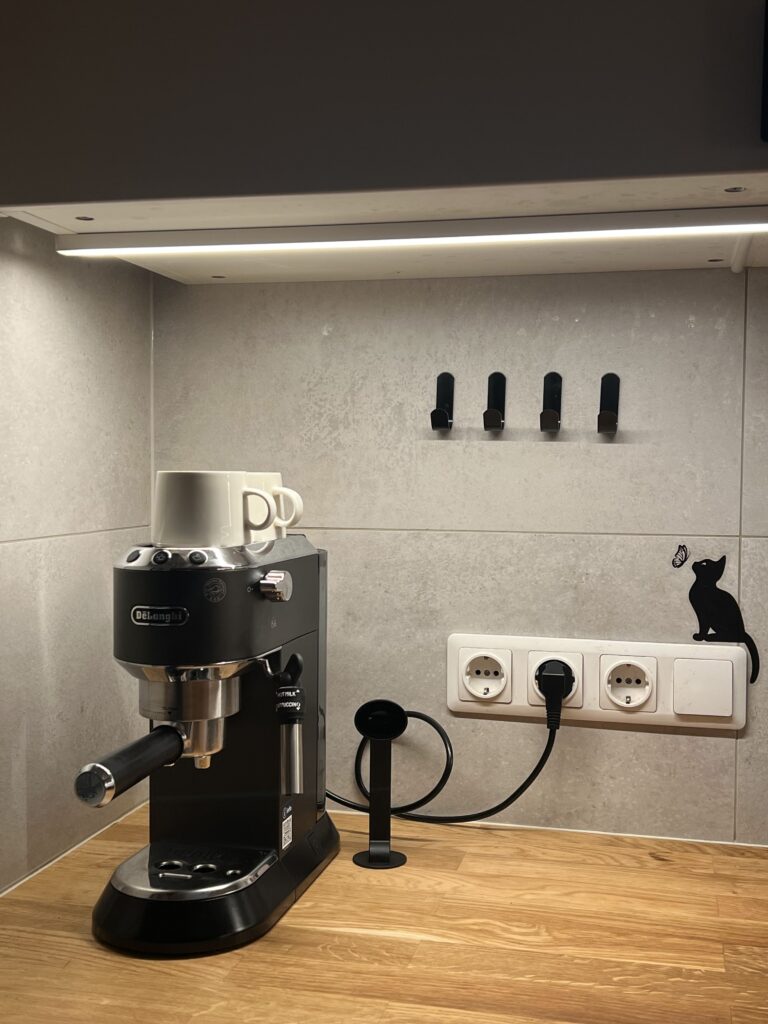
| My full setup at a glance • Machine: DeLonghi EC685 – Ordered from Amazon • Grinder: Shardor burr grinder – Amazon • Coffee distributor tool – Amazon • Espresso measurement tool – Amazon • 350ml milk pitcher – Amazon • Coffee beans: Saku Läte • French press: Already owned • Total setup cost: Under €200 • Daily drink: Cappuccino |
- Started with Lavazza Modo Mio
- The Biggest Thing I Learned: The Grinder Matters More than the Machine
- My Full Setup for Becoming a Home Barista
- What I Would Upgrade Next
- Buying Coffee Equipment in Estonia: What You Need to Know
- My Daily Cappuccino Routine
- If You Are Starting From Scratch in Estonia, Do This!
- Coffee Culture in Estonia
Started with Lavazza Modo Mio
Before this setup, I was not a coffee snob at all. I had a Modo Mio pod machine that came as a free Christmas gift with a laptop. I used it constantly and genuinely loved it.
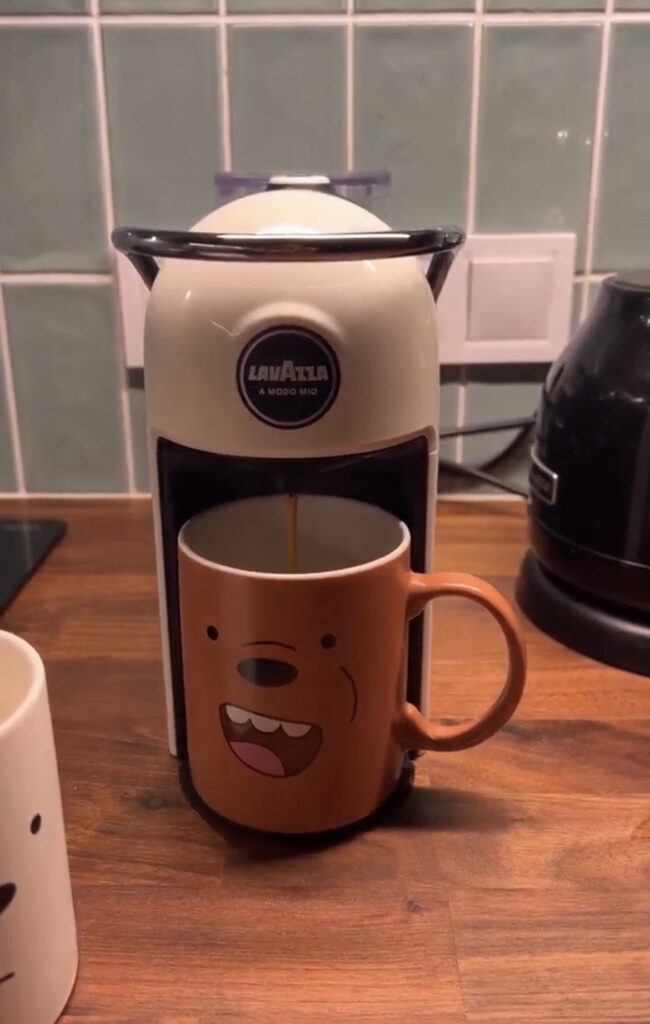
Pods are convenient, consistent, and mess-free. I still think it is a perfectly good way to make coffee at home.
But then I started learning more about espresso, what actually goes into a good cup, how much difference the grind makes, what milk texture does to a flat white, and I got curious.
One thing I also noticed living in Estonia: almost every Estonian household has a coffee machine. If not an espresso machine, then a Nespresso or pod machine. Coffee is not just a morning habit here; it is a social ritual.
That curiosity turned into a 10-day research rabbit hole. Here is what I found.
The Biggest Thing I Learned: The Grinder Matters More than the Machine
This is the one thing every home barista guide says, and I did not fully believe it until I experienced it. The grinder controls everything: grind size, consistency, extraction time.
A cheap grinder with a good machine produces mediocre coffee. A decent grinder with a budget machine produces genuinely good espresso.
In Estonia, options for burr grinders are very limited. The shops that carry them are expensive, significantly more so than ordering from Amazon. I quickly realised that ordering from Amazon.de (Germany) was the practical solution. Delivery to Estonia is fast, prices are lower, and the selection is actually available.
| Blade grinder vs burr grinder: why it matters • Blade grinders chop coffee unevenly, so you get a mix of fine dust and coarse chunks • Burr grinders crush coffee between two surfaces, hence consistent particle size every time • Consistent grind = consistent extraction = better tasting espresso • For espresso specifically, grind consistency is critical; fine and even is what you need • You do not need an expensive burr grinder to start; a mid-range one works well |
My Full Setup for Becoming a Home Barista
1. DeLonghi EC685 Espresso Machine
DeLonghi is the best brand available for home espresso in the affordable range, and the EC685 specifically is one of their most popular models for home baristas.
Good pressure, consistent temperature, easy to use, and compatible with a wide range of accessories, including bottomless portafilters.
My recommendation: order from Amazon rather than buying second hand. The EC685 is available on Amazon at a reasonable price with fast delivery to Estonia, and you get a warranty and peace of mind about the machine’s condition.
Secondhand from Facebook Marketplace can work, but for this model, the price difference does not justify the uncertainty.
| Where to buy: Amazon, order directly to Estonia Price range: €120 – €160 on Amazon Amazon link: Click here Note: The EC685 is the sweet spot for home baristas who are serious but not ready to spend €500+ on a machine. Compatible with aftermarket bottomless portafilters when you are ready to upgrade. Order from Amazon, significantly cheaper than buying locally in Estonia. |
2. Shardor Burr Grinder
This is the piece I researched most carefully. Estonia has very limited options for burr grinders in stores, and what is available is priced significantly higher than ordering from Germany.
I ordered the Shardor from Amazon, and it arrived quickly with no issues.
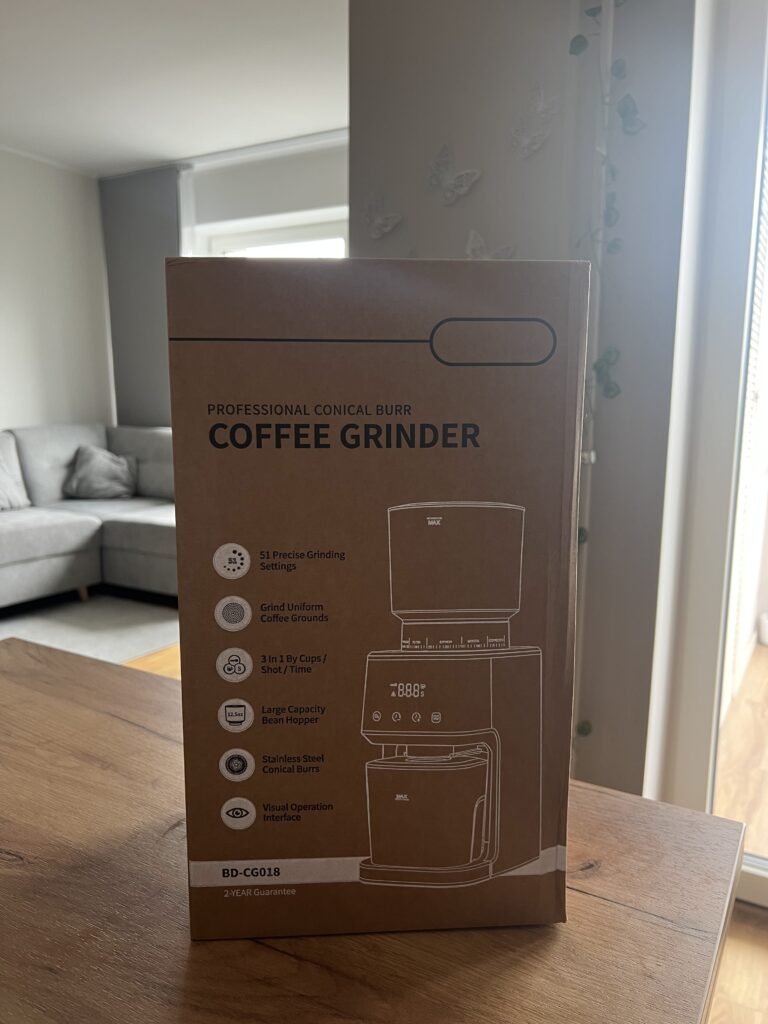
For the price point, it performs really well, with conical stainless steel burrs, 51 grind settings, consistent output, and is easy to clean.
| Where to buy: Amazon, order to Estonia, fast delivery Price range: €45–95 on Amazon Amazon link: Click here Note: Order from Amazon.de, not Amazon.com; delivery to Estonia is faster and cheaper from Germany. Set grind size to fine for espresso; start at the finest setting and adjust slightly coarser until your shot pulls in 25–30 seconds. |
3. Coffee Distributor Tool
This was an addition I made after my initial setup, and it made a noticeable difference to consistency. A coffee distributor tool, also called a leveller, sits on top of the portafilter basket and evenly distributes the ground coffee before you tamp.
Without a coffee distributor tool, coffee can settle unevenly, which causes channelling and inconsistent extraction.
Before I added this, my shots were good but variable. After adding it, the consistency improved significantly; the same grind setting produces the same result every time now.
For under €15, it is one of the best value additions to a budget setup.
| Where to buy: Amazon Price range: €10–20 depending on size and material Amazon link: Click here Note: Make sure you match the size to your portafilter basket; most DeLonghi EC685 baskets are 51mm. A distributor tool is one of the cheapest upgrades that makes a real difference to shot consistency. |
4. Espresso Measurement Tool
Precision matters in espresso more than in almost any other brewing method. A small change in dose weight changes the entire flavour profile of the shot.
The espresso measurement tool, a small scale designed for espresso, lets you weigh your dose consistently every time.
Before I had this, I was eyeballing the dose. The shots were inconsistent. Now I know exactly how much coffee is going into each shot, and I can replicate what works.
| Where to buy: Amazon Price range: €10–25 Amazon link: Click here Note: Look for one that measures to 0.1g accuracy. Some espresso scales also have a built-in timer, which is useful for timing your shot extraction. A basic one works fine to start. |
5. 350ml Milk Pitcher
For cappuccinos, the milk pitcher size matters. Too large, and it is hard to control the pour and texture.
350ml is the right size for one or two cappuccinos, enough milk to steam properly without wasting.
First, I tried to find one in Tallinn, but they were very expensive, around 25 euros, so I decided to order mine from Amazon as part of building out the setup.
| Where to buy: Amazon Price range: €8–20 Amazon link: Click here Note: 350ml is the ideal size for cappuccinos and flat whites. Stainless steel is essential; it conducts heat properly, so you can feel when the milk is at the right temperature through the jug. Look for one with a pointed spout for better pour control when you start learning latte art. |
6. Coffee Beans: Saku Läte
I asked an Estonian friend who is genuinely passionate about coffee what beans to use for home espresso. He pointed me to Saku Läte, an Estonian beverage company based in Saku Parish, with coffee blends sourced from Colombia and other international regions.
The beans are consistently of good quality and widely available, which makes them a practical choice for everyday home espresso in Estonia.
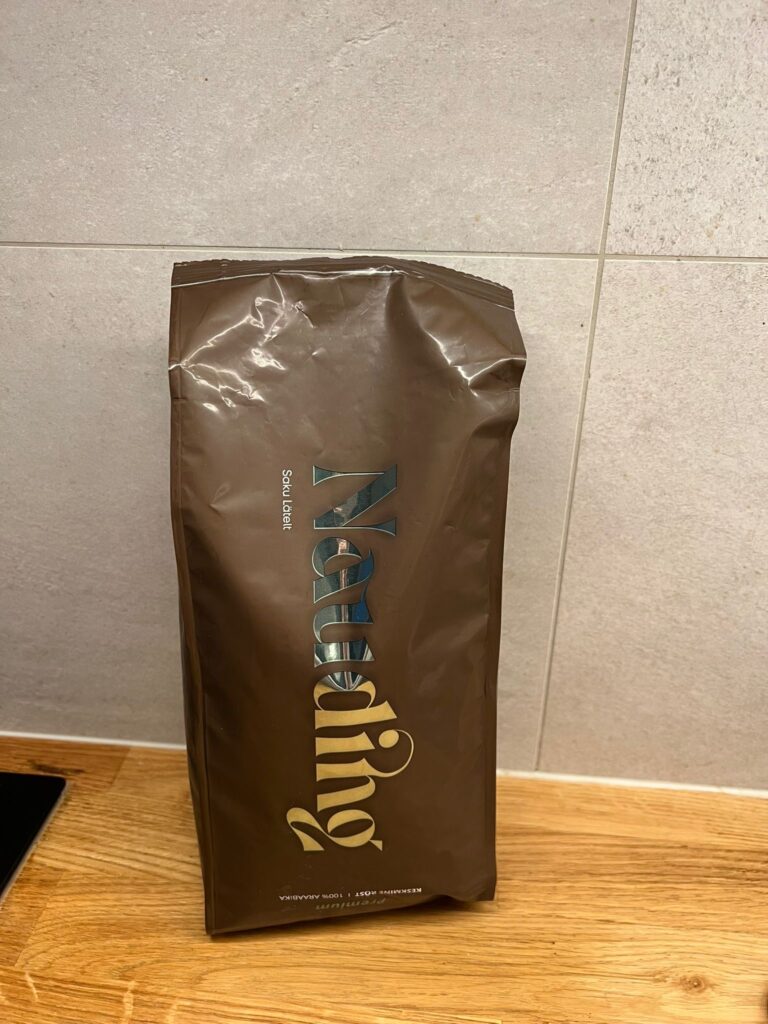
That said, there are plenty of other excellent options worth exploring; Kokomo and The Brick are two local roasters in Tallinn that coffee people here genuinely rate.
Supporting a local roaster makes more sense to me than ordering beans from abroad when there is quality available right here. Fresh, locally sourced, and you know exactly where it comes from.
| Where to buy: Find them online or at select Tallinn shops Price range: 1 kg of Arabica Beans starts from €28.40 Link: Click here Note: Ask your local café what beans they use and where to buy them. In Tallinn, most independent cafés are happy to point you toward good roasters. Freshness matters enormously for espresso; buy smaller quantities more frequently rather than a large bag that sits for weeks. |
7. French Press
I already had a French press before building this setup. I still use it occasionally for a different style of coffee, slower, more relaxed, good for weekends.
If you are just starting out and not sure about espresso, a French press is the easiest and cheapest way to start making good coffee at home.
| Where to buy: Amazon or any home goods store in Tallinn Price range: €12–40 Amazon link: Click here Note: For beginners, this is the lowest barrier entry point. No electricity needed, easy to clean, forgiving with grind size. A good starting point before committing to an espresso setup. |
What I Would Upgrade Next
Overall, the setup is working really well; my espresso and cappuccinos have improved significantly since adding the distributor tool and measurement scale.
But there are two things on my upgrade list:
- Bottomless portafilter: I want to upgrade from the standard DeLonghi portafilter to a bottomless one. It removes the spout so espresso flows directly from the basket into the cup, which lets you see exactly how your extraction is going. Channelling, uneven distribution, bad tamping, it all shows immediately. It is a diagnostic tool as much as an equipment upgrade. The plastic tamper that comes with the EC685 will also be replaced with a steel one for better consistency.
- Knock box: This is the one thing missing from my setup right now. A knock box is a small container with a rubber bar across the top; you tap the portafilter against it to eject the used coffee puck cleanly. Without it, you are knocking the puck into the bin or sink, which gets messy. Not expensive, and it would make the daily routine significantly cleaner.
| • Bottomless portafilter: compatible with DeLonghi EC685 (check 51mm basket size) • Steel tamper: the plastic one that comes with the machine is functional, but a steel tamper gives better pressure and feel • Knock box: any size works for home use; look for one with a removable bar for cleaning • All available on Amazon.de at reasonable prices |
Buying Coffee Equipment in Estonia: What You Need to Know
This is something no international home barista guide covers, and it is genuinely useful if you are based here.
- Equipment is significantly more expensive in Estonian stores than on Amazon. The selection is also much more limited, especially for burr grinders and accessories.
- Amazon.de delivers to Estonia quickly and reliably. This is where I order equipment and accessories. Use .de, not .com, for faster and cheaper shipping.
- Facebook Marketplace Tallinn is good for second-hand machines if you want to experiment cheaply first, but for the EC685 specifically, the Amazon price is reasonable enough to buy new with warranty.
- KovikSemu is the best local option for machine-specific parts and accessories where compatibility matters.
- Local roasters are genuinely good. Coffee People, Kokomo, and The Brick are worth checking.
- Ask an Estonian who is passionate about coffee; they exist, and they are generous with their knowledge. The coffee community in Tallinn is small but serious.
My Daily Cappuccino Routine
I make cappuccinos most mornings. The process, once you have the setup dialled in, takes about 5 minutes, and the result is genuinely better than most café cappuccinos I pay €4 for.
- Dose and distribute: weigh coffee with the measurement tool, grind with the Shardor, distribute evenly with the leveller tool
- Tamp: firm, consistent pressure with the tamper
- Pull the shot: 25–30 seconds for a double espresso is the target on the EC685
- Steam the milk: cold milk in the 350ml pitcher, steam wand just below the surface, stretch, then texture
- Pour: espresso in the cup first, steamed milk over the top
I am still learning latte art; it is harder than it looks. The pouring technique takes practice, and the milk texture has to be exactly right. But that is part of what makes it interesting.
My goal eventually is to get good enough that when I open my own café one day, I will already know how this works from both sides, as someone who has practiced at home for years and as the founder of Kafeo.
If You Are Starting From Scratch in Estonia, Do This!
Step 1: Order a DeLonghi EC685 from Amazon, budget €120–160
Step 2: Order a Shardor burr grinder from Amazon, budget €35–45
Step 3: Order a coffee distributor tool and milk pitcher from Amazon, budget €20–30
Step 4: Buy fresh beans from a local Tallinn roaster like Saku Läte
Step 5: Watch 3 YouTube videos on espresso extraction and milk steaming before your first shot
Step 6: Accept that the first week will produce bad coffee; that is how you learn
Total budget: €180–240 for a complete setup that will last years
Coffee Culture in Estonia
Setting up a home espresso bar made me think a lot about why coffee is such a central part of daily life here.
Estonians take their coffee seriously; almost every household has a machine of some kind, independent cafés are everywhere in Estonia, and there is a genuine appreciation for quality over convenience.
If you want to understand that culture more deeply, I wrote about it here: Coffee Culture in Estonia: From Soviet Cups to Tallinn’s Third Wave Scene
Disclosure: This post contains Amazon affiliate links. If you purchase through them, I may earn a small commission at no extra cost to you. I only recommend products I personally use in my own home setup. All opinions are my own.
I am a founder building an operating system for independent cafés and a growth marketer who has called Estonia home for more than five years. Between work, life, and slow walks through Estonian cities and forests, I gather small moments that rarely make it into official guides and turn them into videos and blogs for people who are or would like to live in Estonia.